If you follow me on Facebook or Instagram (which you should!) you’ll have seen I’m participating in #MendMarch ! On wordpress I tend to only post new pieces, and for #MendMarch I’ve dug into my old mends. Today however, I had something that needed a real quick fix, an easy invisible mend to share. Nothing fancy, no need to go into too much detail – but what I will share is that I love that when something like this happens, I hardly miss a beat, I stitch it up and away I go. Mending has become such a standard part of my life I hardly think about it sometimes.
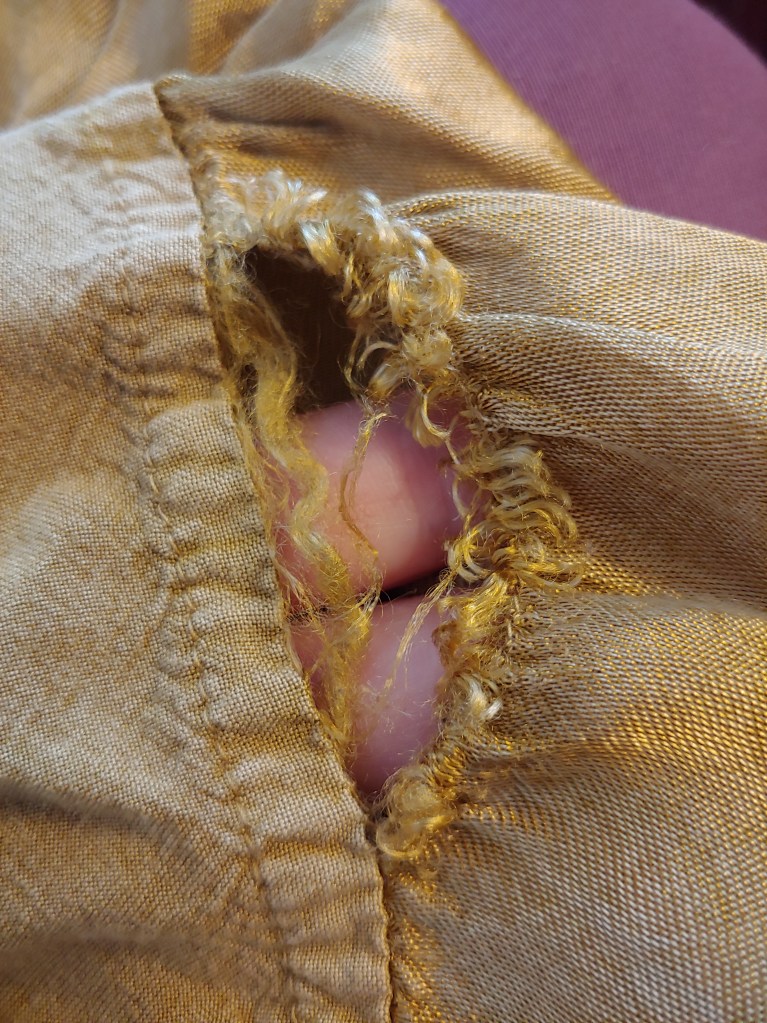
So I have this really cool 100% cotton shirt that I love, I’m pretty sure I stole it from an ex (don’t we all have those clothes?) This tear is definitely a case of me ignoring a small tear and it growing and growing. It ripped next to the seam, and frayed a lot, I had quite a bit of missing weave, the more I looked at it, I realized if I didn’t want to have to darn a tear (and when you see the darning project I’ve been working on, you’ll see why I need a break from darning!) I was going to have to put a patch in the back.
First I trimmed away most of the frayed threads to give myself clean lines to work with, and I dug into my scrap pile for the right piece of fabric to patch it with, and fussed with it for a good 20 minutes before I finally gave in and got my lazy butt off the couch for some pins to hold it in place.
I backstitched all the way around in a rectangle, but I wasn’t confident in its strength, so I added a second. I saw the opportunity to make it artistic, so I put X’s all the way down, and couched them in the middle.
I like the blue-on-blue thread, it’s a visible mend, but not too visible. I was inspired to take this route when a friend mentioned that they were not sure how acceptable visible mending would be in her workplace attire, so I decided to experiment with a few things to see what I could come up with – allowing a mend to be on display, but delicately; just another step in making visible mending an accepted norm.
If I could do anything different, I’d put this in a medium sized embroidery hoop, I think it would have helped me keep my lines much straighter.
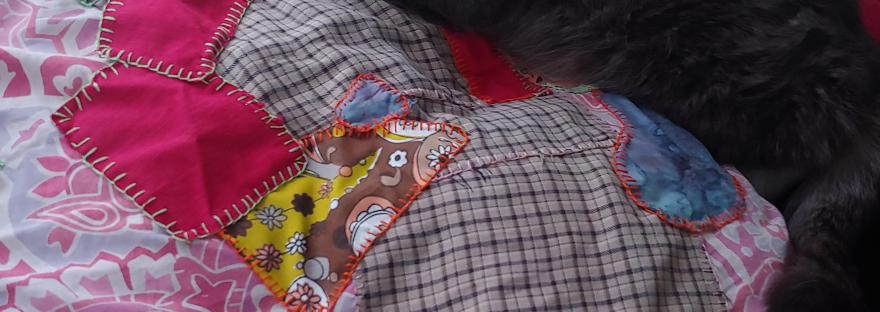
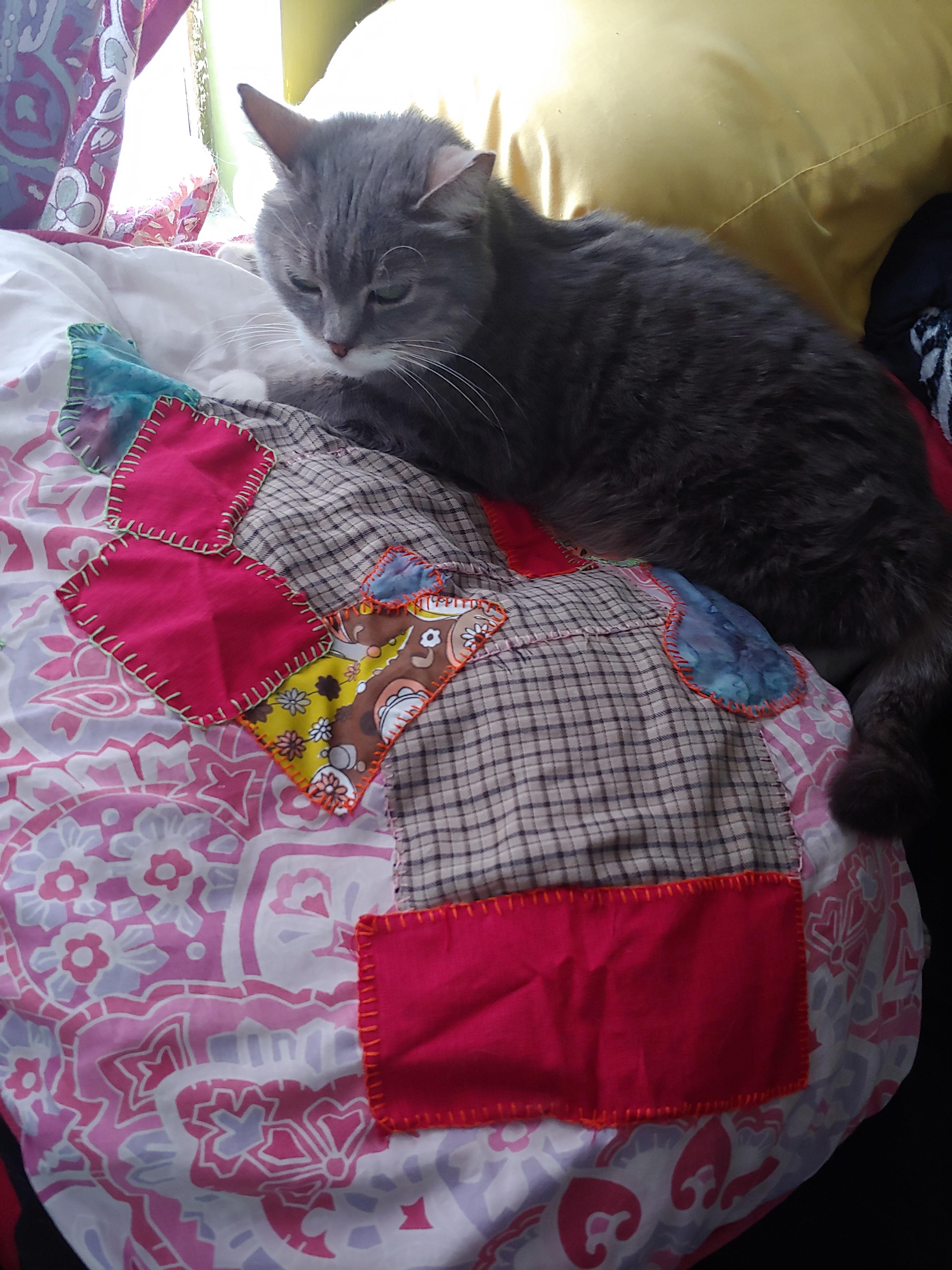
When I decide whether I want to mend something, or repurpose it elsewhere, I first ask “how much do I love this item?” Well, I don’t love this pillow case at all, in fact, years ago I even gave up patching the comforter it came with – but my kitty, Gravy, adores this pillowcase, so I just have to save it.
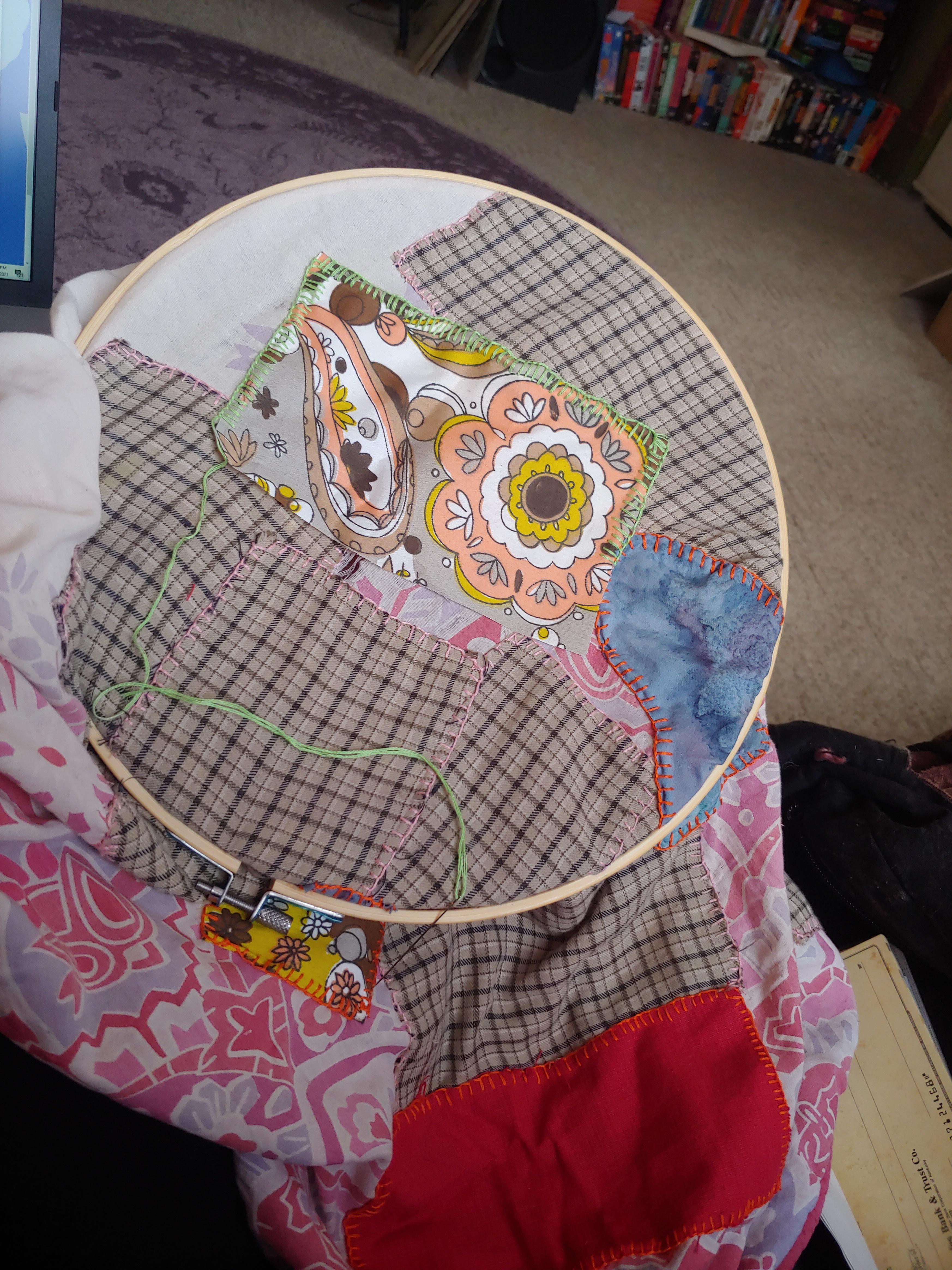
This is an ongoing mend, I have to add more patches almost every time I wash it, but it’s given me lots of practice with patching and blanket stitch (can you tell blanket stitch is my favorite way to affix patches?). I decided to use an embroidery hoop when patching this as it helped me see the weak spots in this old fabric, I could stretch it out and hold it up to the light.





 Contrary Expressions